
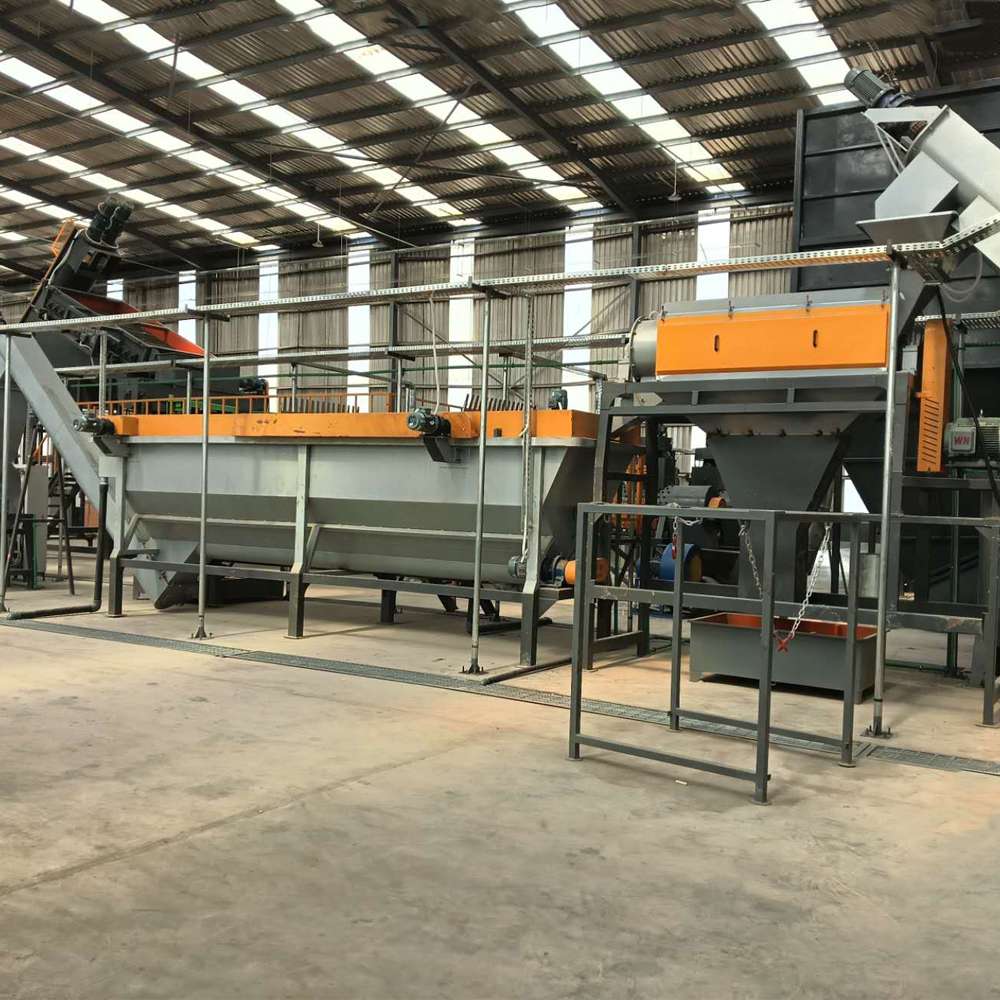
Why Is Your PET Washing Line Producing Less Than Expected? (7 Key Bottlenecks & Fixes)
You invested in a high-capacity PET bottle washing line rated at 500 kg/h or even 1000 kg/h for your plastic recycling plant. Yet after full installation and trial runs, your actual production output only reaches 300–400 kg/h, far below the rated capacity.
If this scenario sounds familiar, you’re not alone. Most PET recycling plant owners immediately assume the washing line itself is defective. However, industrial recycling line capacity follows the weakest link principle: your overall production speed is strictly limited by the slowest, least efficient machine in the entire processing workflow.
As a professional PET recycling equipment supplier, we have helped dozens of factories resolve low-output issues over the years. In this SEO-optimized guide, we break down the 7 critical equipment bottlenecks that restrict PET washing line productivity, explain their common problems, and share cost-effective solutions to boost your line throughput without full equipment replacement.
1. Bale Breaker: The First Hidden Bottleneck of PET Recycling Lines
Most recycling plant operators prioritize crushers, friction washers, and final washing tanks while ignoring the foundational role of the bale breaker. As the first processing unit in the entire line, it directly determines continuous material supply for all downstream equipment.
Compressed waste PET bottle bales cannot be fed evenly and quickly with low-quality bale breakers, resulting in frequent line shutdowns and idle equipment waiting for raw materials. This single machine can cripple your entire PET washing line capacity.
1.1 Common Bale Breaker Operational Problems
- Tightly compressed PET bottle bundles fail to fully disperse
- Unstable and inconsistent material feeding speed
- Extra labor costs for manual bottle bundle separation
- Frequent empty running of conveyor belts and downstream machines
1.2 Effective Solutions
Upgrade to a heavy-duty PET bale breaker engineered for high-volume recycling lines, featuring robust rotating shafts, high-capacity feeding structures, and continuous uniform bottle dispersion. A stable front-end feeding system ensures every downstream recycling machine operates at full efficiency consistently.
2. Conveyor Belts: Small Equipment With a Massive Impact on Line Throughput
Conveyor belts may look simple, but they are the core of continuous material handling in PET washing plants. Poorly designed or low-spec conveyor systems disrupt material flow and cause non-stop production interruptions, severely limiting hourly output.
2.1 Common Conveyor Belt Issues
- Material accumulation and bottle stacking on the belt
- PET bottles slipping or falling off during transportation
- Frequent belt blockages and jams
- Unplanned production halts caused by unstable conveying
2.2 Effective Solutions
Equip your PET recycling line with industrial-grade conveyors featuring matched belt width, adjustable conveying speed, heavy-duty reinforced frames, and wear-resistant belt materials. Smooth, uninterrupted material flow is the basic guarantee of maximum PET washing line productivity.
3. Label Remover: The Most Overlooked Capacity-Limiting Machine
Many small and medium-sized recycling factories still rely on manual label sorting, which is inefficient, costly, and harmful to final clean PET flake quality. Residual labels not only reduce washing efficiency but also increase impurity contamination rates.
Crucially, low-efficiency label removal forces operators to reduce the overall feeding speed of the entire line, directly dragging down hourly production capacity.
3.1 Effective Solutions & Benefits
Install a high-efficiency PET bottle label remover that removes over 98% of plastic labels before the crushing process. This upgrade delivers multiple core advantages:
- Greatly improved subsequent washing and cleaning efficiency
- Lower contamination and purer recycled PET flakes
- Significantly reduced manual sorting labor costs
- Stable high-speed feeding and boosted overall line throughput
4. Crusher: The Core Heart of PET Washing Line Capacity
The PET crusher machine is the most decisive piece of equipment affecting production volume. A common mistake among plant owners is matching a 1000 kg/h rated washing line with a low-power crusher that only supports 600 kg/h processing capacity. In PET recycling production, the crusher capacity defines the maximum line output.
4.1 Common Crusher Bottlenecks
- Insufficient rotor rotating speed leading to slow crushing
- Unreasonable blade design unsuitable for waste PET bottle crushing
- Overly small screen holes restricting material discharge
- Rapid blade wear causing unstable crushing quality and speed
- Underpowered motor unable to support high-volume continuous operation
4.2 Effective Solutions
Select a high-performance PET crusher with high-efficiency rotor design, durable wearable blades, convenient blade adjustment structure, matched screen hole size, and sufficient motor power. Always ensure crusher parameters fully match your target line capacity to avoid core bottlenecks.
5. Washing Tanks: Larger Size Does Not Equal Higher Productivity
A widespread misconception in the plastic recycling industry is that larger washing tanks can automatically improve production capacity. In fact, unreasonably designed oversized washing tanks often trigger more production problems instead of boosting efficiency.
5.1 Common Washing Tank Problems
- Serious material accumulation inside the washing tank
- Uneven cleaning leading to mixed clean and dirty PET flakes
- Static material zones forming new processing bottlenecks
- Floating impurities re-adhering to clean PET flakes
5.2 Effective Solutions
A high-efficiency industrial washing system focuses on scientific structural design rather than oversized volume. Optimized washing equipment is equipped with strong circulating water systems, stable paddle stirring structures, continuous material propulsion functions, and efficient impurity separation devices. The goal of professional PET washing is smart, efficient cleaning, not blind oversize configuration.
6. High-Speed Dryer : Faster Drying Equals Higher Production Efficiency
Wet PET flakes severely slow down all downstream processing procedures. Many recycling plants use outdated low-speed drying equipment, which cannot keep up with front-end crushing and washing speed, causing material backlogs and restricting overall line output.
6.1 Problems Caused by Low-Efficiency Drying Equipment
- Material backlog and production line stalling
- Excessively high moisture content in finished PET flakes
- Reduced hot washing cleaning effect
- Degraded final recycled PET flake quality
6.2 Effective Solutions
Upgrade to an optimized high-speed PET flake dryer with a precision rotor structure. This equipment quickly removes most surface moisture from washed PET flakes, accelerates overall line operating speed, and stabilizes finished product quality. For most underperforming recycling lines, dryer upgrading is the fastest and most cost-effective way to increase capacity.
7. Friction Washer: The Hidden Capacity Booster for PET Recycling Lines
Most plant operators only regard friction washers as pure cleaning equipment. In reality, a high-quality friction washer is a key hidden factor that improves overall line efficiency and increases production throughput.
7.1 Core Functions of High-Efficiency Friction Washers
- Efficiently remove stubborn dirt, glue, and residual impurities on PET flakes
- Thoroughly separate loose residual labels missed by the label remover
- Effectively reduce final product contamination rate
- Avoid impurity accumulation causing downstream equipment overload
When paired with a professional centrifugal dryer, the friction washer greatly optimizes the entire PET washing workflow and comprehensively improves production efficiency and product purity.
Why Single-Machine Upgrades Fail to Improve Line Capacity
The biggest mistake in PET recycling line optimization is upgrading only a single piece of equipment, such as just the crusher or dryer. As mentioned earlier, the PET washing line follows the weakest link principle, similar to a highway traffic system.
Even if six lanes of a highway are fully unobstructed, a single narrow bridge will slow down all passing vehicles. Similarly, the maximum capacity of your entire PET washing line is determined solely by the lowest-capacity equipment in the workflow. Isolated upgrades cannot fundamentally solve low-output problems.
Step-by-Step Guide to Boost Your PET Washing Line Output
If your recycling line output is lower than the rated standard, troubleshoot and optimize according to the following core checkpoints first. In most cases, optimizing 1–2 bottleneck devices can increase production capacity by 20–40% without full line replacement:
- Does the bale breaker provide stable and continuous material feeding?
- Is the label remover efficient enough to avoid limiting line speed?
- Is the crusher’s processing capacity fully matched with the line rating?
- Do conveyor belts cause frequent material blockages and production interruptions?
- Is the washing tank system scientifically designed for continuous production?
- Can the centrifugal dryer remove flake moisture thoroughly and efficiently?
- Is the friction washer operating at full design efficiency?
Final Thoughts: Build a Balanced, High-Profit PET Washing Line
Investing in a waste PET bottle recycling line is not about purchasing oversized single equipment, but about building a fully balanced and matched production system. A scientifically configured PET washing line delivers stable high output, low operating costs, premium PET flake quality, minimal equipment downtime, and a faster return on investment for your recycling plant.
Whether you are planning to build a new PET recycling factory or upgrade your existing washing line, professional equipment configuration evaluation is essential to match your target production capacity and profit goals. A well-designed PET recycling line does more than clean waste bottles—it maximizes your long-term recycling project profits.
To learn more about industry-standard PET recycling specifications and sustainable plastic recycling development guidelines, refer to authoritative resources from the Institute of Scrap Recycling Industries (ISRI), the global leading authority for scrap and plastic recycling industry standards.
If you are facing low output, frequent bottlenecks, or unstable operation with your existing PET washing line, feel free to contact our professional team. We provide free one-on-one line inspection, problem analysis, and targeted optimization solutions to help you maximize your recycling line productivity and profits.


